Sri Lankan food · Traveller guide
Coconut in Sri Lankan Cooking: Milk, Fresh Coconut and Traditional Dishes
How Sri Lankan cooking uses coconut milk, grated coconut and sambol in curries, breads, breakfast dishes and desserts.
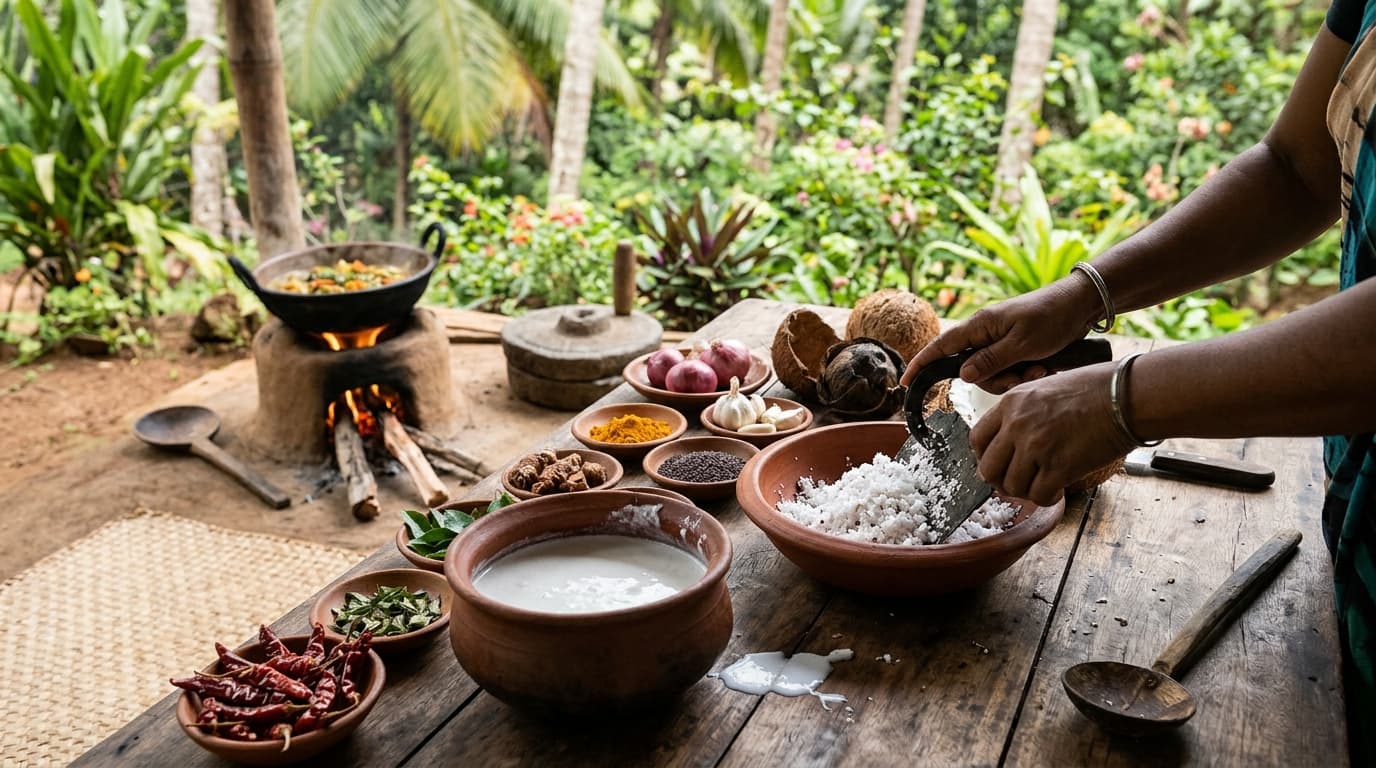
Coconut is everywhere in Sri Lankan food: in curries, breakfasts, sambols, sweets and drinks. But it does a different job in each.
Coconut milk: richness and body
It gives many curries their silky texture. It may be paired with vegetables, lentils or fish. How much you add, and how long you cook it, changes the consistency. Note that coconut milk does not make a curry mild if chilli is present.
Grated coconut: texture and flavour
Fresh grated coconut is used in sambol, bread and vegetable dishes. Where coconut milk adds creaminess, grated coconut adds bite and a clearer coconut taste.
Pol sambol
Grated coconut, chilli, onion and lime. Fresh, tangy and spicy. Every household balances it differently.
Coconut at breakfast
Pol roti folds grated coconut into dough. Pittu steams rice flour with coconut. Coconut milk is often served alongside.
Coconut in desserts
Coconut milk makes creamy bases like watalappan, while grated coconut gives body to sweets.
Learn to notice the difference
Next time you eat, ask: is the coconut creamy, textural or fresh? You will start to see how one ingredient can be so versatile.
Cook with coconut in Hikkaduwa
At our private class you work with coconut hands-on, in a garden kitchen, with a local host. It costs $15 per person, includes complimentary hotel pickup within 15 km, and you enjoy the meal you cook, followed by curd and kithul treacle.