Sri Lankan food · Traveller guide
Is Sri Lankan Food Always Spicy? A Guide for First-Time Visitors
Is Sri Lankan food too spicy? Learn how chilli, spices and coconut milk work, which dishes tend to be mild, and how to ask for less heat.
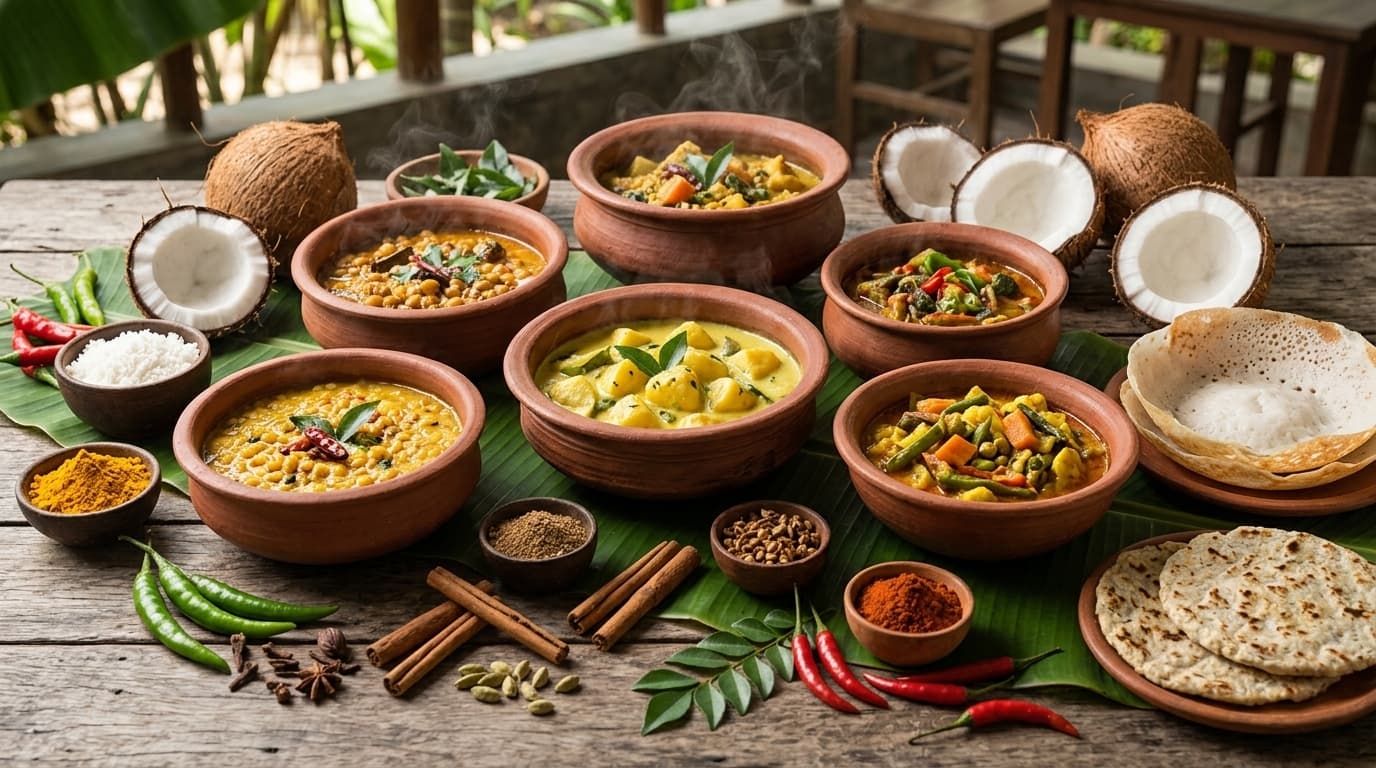
Short answer: no, not always. Sri Lankan food is rich in spices, but spices and heat are not the same thing.
Spicy versus aromatic
Cinnamon, cardamom, cumin, coriander, turmeric and curry leaves add fragrance and depth. Chilli adds heat. Many dishes use lots of the first and little of the second.
Heat varies by dish and by cook
Some curries are bold and fiery. Others are gentle and creamy. Even two dishes with the same name can taste very different, so it helps to ask.
Does coconut milk make it mild?
It softens a dish, but it does not guarantee mildness. A coconut curry may still contain chilli.
Options if you prefer mild food
Dhal curry and some vegetable curries can be quite gentle. Hoppers, string hoppers and pol roti are mild staples, though their sambol or curry may be hot.
A helpful phrase: "A little spice is fine, but please no strong chilli."
Allergies are different from preferences
Skipping chilli does not make a dish allergy-safe. If you have an allergy, say so clearly and ask about ingredients and preparation.
Can I join a cooking class if I dislike chilli?
Yes. Sri Lankan cooking is much more than heat. You can learn how coconut is used, how spices create aroma and how dishes balance one another, with the chilli adjusted to you.
Tell us before you come
Mention your spice level and dietary needs when you message us on WhatsApp, and your host will plan accordingly.
At Ceylon Cooking Class in Hikkaduwa, the class is private, so the food can be cooked the way you like it. It costs $15 per person, includes complimentary hotel pickup within 15 km, and you eat everything you cook.