Sri Lankan food · Traveller guide
Why Food Is an Important Part of Sri Lankan Culture
How Sri Lankan food connects family traditions, hospitality, celebrations and regional ingredients across the island.
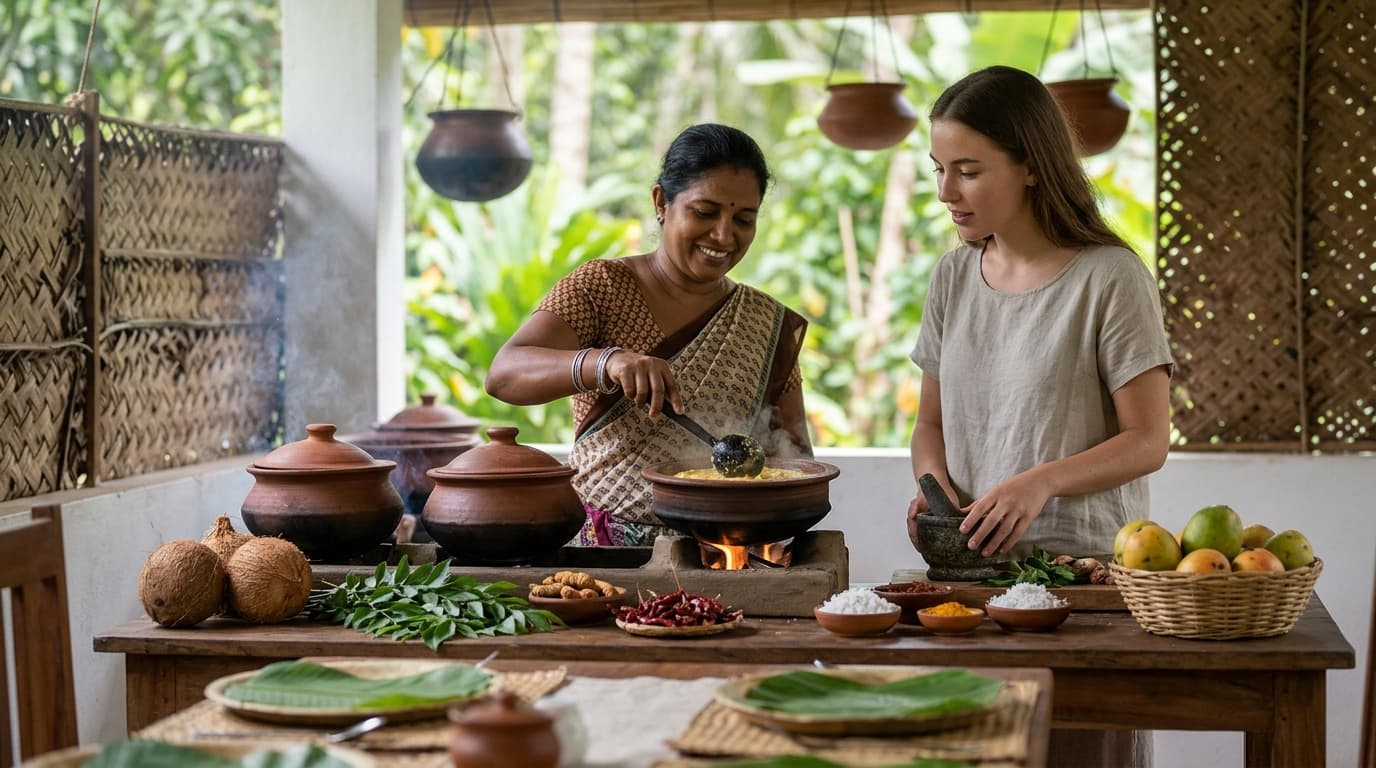
In Sri Lanka, food is how people welcome, celebrate and spend time together. For a visitor, a meal can teach as much as a museum.
Everyday meals
Rice and curry is the familiar centre of the table, with dhal, vegetable curries, sambol, mallung and perhaps fish or meat. Meals can be simple or abundant.
Hospitality
Offering food is a way of saying welcome. If you are invited, show appreciation and follow your host's lead.
Celebrations
Kiribath, or milk rice, marks special moments. Kavum and kokis are linked with festive periods such as the Sinhala and Tamil New Year.
Ingredients with a long history
Rice, coconut, lentils, vegetables, spices and palm sweeteners appear in sweet and savoury dishes alike.
Regional and household differences
A dish can have several versions depending on the region, the family and what is growing nearby.
A way to explore a place
Trying traditional dishes shows you local ingredients. Asking politely about a dish often starts a conversation.
Experience it in a home-style kitchen
At Ceylon Cooking Class in Hikkaduwa, a local host shares family recipes and cooking secrets, and you sit down to eat the meal you cooked together. The class is private and costs $15 per person, with complimentary hotel pickup within 15 km.