Sri Lankan food · Traveller guide
How Traditional Sri Lankan Food Is Prepared: From Ingredients to the Table
How traditional Sri Lankan food is prepared: ingredient prep, spices, tempering, curries, coconut and assembling a balanced meal.
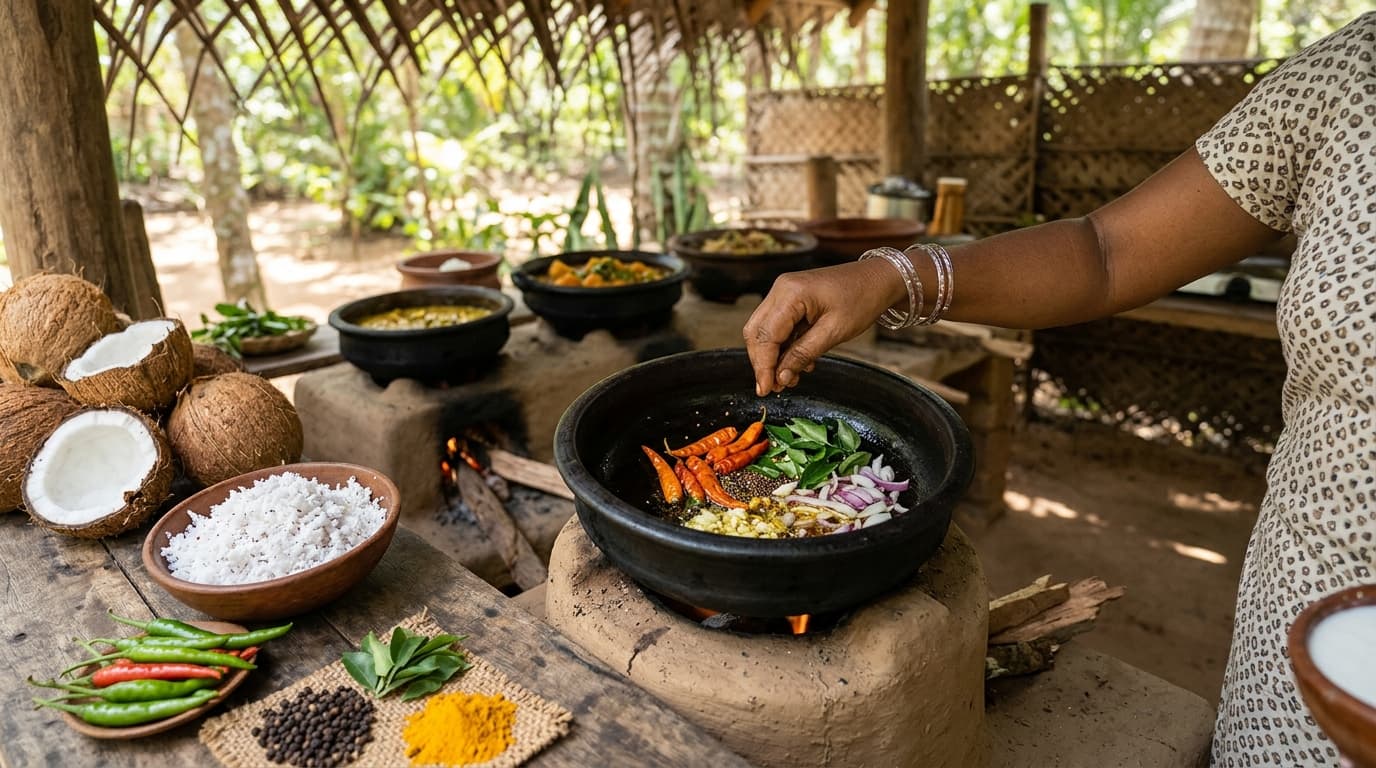
Behind every Sri Lankan plate is a sequence of small steps. Each one affects flavour and texture.
Prepare first
Washing, cutting, grating and measuring before the pan gets hot makes cooking smoother. Even the size of the vegetables matters.
Spices and aromatics
Spices may be whole, crushed, ground or lightly roasted. Curry leaves, onion and garlic are often cooked in oil to release fragrance. This is tempering.
Cooking a curry
Dhal uses lentils, vegetable curries use produce such as pumpkin, eggplant or beans. Some have coconut milk, some are drier.
Coconut in different forms
Milk adds richness and liquid. Grated coconut adds texture. It also appears in pol sambol, pol roti and pittu.
Balancing the meal
Several dishes together offer contrast: mild, tangy, creamy, aromatic and sometimes fiery.
Adjust with care
Follow a reliable recipe first, then change one element at a time.
Serving and sharing
Everyday meals and festive meals differ, and every region and household has its own approach.
See it with your own eyes
Some techniques are hard to explain on paper. At Ceylon Cooking Class in Hikkaduwa, you watch and do them yourself in a private garden-kitchen session. It costs $15 per person, includes complimentary hotel pickup within 15 km, and you eat the meal you prepare.