Sri Lankan food · Traveller guide
Sri Lankan Rice and Curry Explained: Dishes, Flavours and Traditions
What makes Sri Lankan rice and curry special? Explore dhal, vegetable curries, sambol, mallung, coconut milk and how the dishes work together.
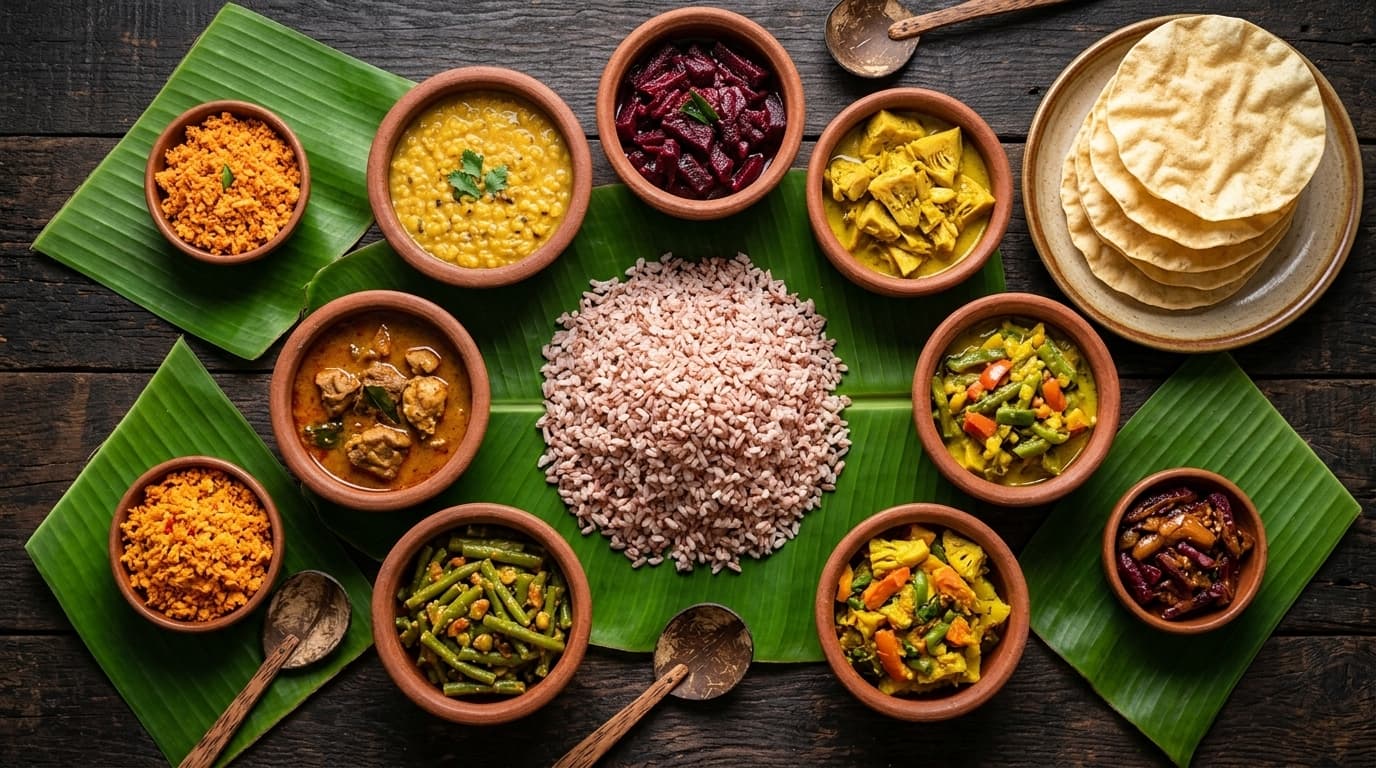
Ask a Sri Lankan what they ate today and the answer is probably rice and curry. But this is not rice with one sauce. It is a whole table of dishes, each with its own role.
What is on the plate?
A typical meal has rice at the centre, surrounded by several of these:
- Dhal curry
- One or more vegetable curries
- Mallung, a leafy salad-like dish with coconut
- Sambol, often made with coconut
- Papadum for crunch
- A fish or meat curry
What is served depends on the season, the region and the cook.
Rice is the canvas
Mild and neutral, rice balances rich, tangy, spicy and creamy dishes. Taste each curry on its own first, then mix.
Dhal curry
Red lentils cooked with spices, often with coconut milk. Creamy and gentle, it is the comfort dish of the plate.
Vegetable curries
Pumpkin, eggplant, green banana, beans and jackfruit all appear, depending on what is in season. Some are creamy with coconut milk, others are drier and spicier.
Coconut everywhere
Coconut milk makes curries rich, while grated coconut adds texture to sambol and mallung. Pol sambol, with chilli, onion and lime, is the fresh, tangy kick.
Is it all spicy?
No. Some curries are mild and creamy, others are fiery. Cinnamon, cardamom and cumin add aroma without heat. Just ask for milder dishes.
How to enjoy it
Start with small tastes. Notice how textures and flavours contrast, then combine them with rice. If a dish impresses you, ask about it, because every household has its own version.
Cook the full plate yourself
At Ceylon Cooking Class in Hikkaduwa, you cook a complete traditional rice-and-curry meal with a local host, then sit down and eat it together. It costs $15 per person, with complimentary hotel pickup within 15 km and a complimentary dessert of curd and kithul treacle.